C13Social impact
Health for All – How Can Technology Make Healthcare Smarter, Affordable and Accessible?
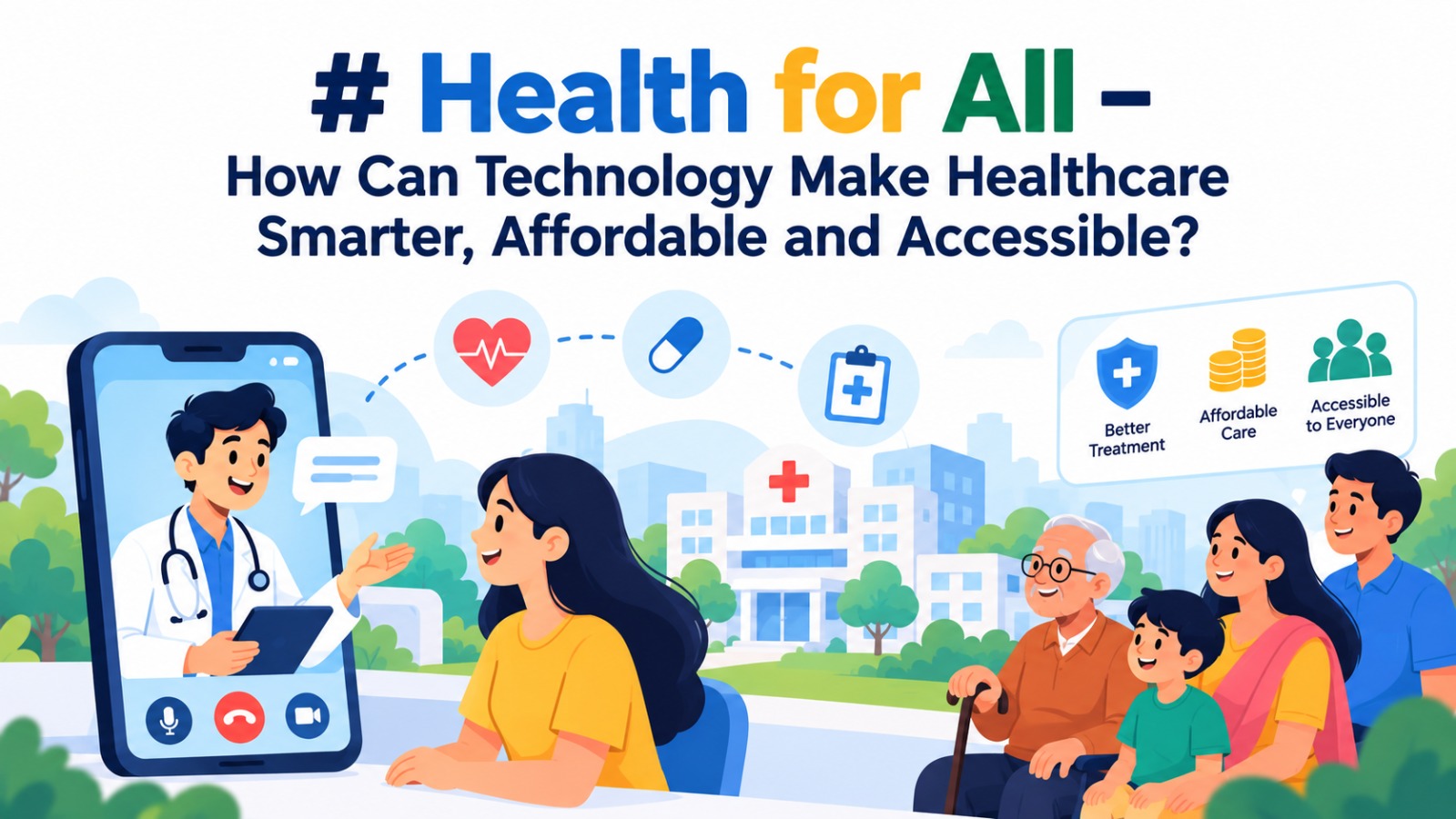
Limited access to affordable healthcare, delayed identification of health problems, inadequate preventive healthcare awareness and unequal availability of medical facilities remain significant challenges, particularly in rural and underserved communities. There is a growing need for innovative, low-cost and accessible healthcare technologies that support early risk identification, health monitoring, preventive care and better healthcare delivery.
Challenge category: MedTech / Biotech / Health Tech.
Problem statement: Limited access to affordable healthcare, delayed identification of health problems, inadequate preventive healthcare awareness and unequal availability of medical facilities remain significant challenges, particularly in rural and underserved communities. There is a growing need for innovative, low-cost and accessible healthcare technologies that support early risk identification, health monitoring, preventive care and better healthcare delivery.
Student challenge: Develop an innovative, practical and affordable solution using technology, biotechnology or healthcare innovation to improve health awareness, support preventive healthcare, monitor wellness or enhance access to healthcare services. Solutions may focus on non-invasive health monitoring, assistive healthcare devices, safe biomedical innovations, healthcare accessibility or digital health management.
Potential solution areas: Smart health monitoring devices, AI-assisted wellness applications, medication reminder systems, low-cost assistive medical devices, telehealth support platforms, non-diagnostic health screening concepts or biotechnology-based environmental health solutions.
SDG alignment: SDG 3 – Good Health and Well-being; SDG 9 – Industry, Innovation and Infrastructure; SDG 10 – Reduced Inequalities; SDG 11 – Sustainable Cities and Communities.
Commercialization potential: Digital health platforms, affordable wellness monitoring devices, assistive healthcare technologies, preventive healthcare applications, health education tools and biotechnology-based solutions.
Target beneficiaries: Patients, healthcare professionals, hospitals, rural communities, elderly individuals, persons with disabilities and public health organizations.
Special note: School-level prototypes should prioritize safe, non-invasive approaches. Solutions involving medical diagnosis, treatment, biological samples or medical devices must undergo appropriate expert review and regulatory validation before real-world deployment.
Objectives
Develop an innovative, practical and affordable solution using technology, biotechnology or healthcare innovation to improve health awareness, support preventive healthcare, monitor wellness or enhance access to healthcare services.
Eligibility
Teams of students from Classes 9–12 of a registered school.
Submission guidelines
Submit a 10–12 slide pitch deck as PDF: problem, users, solution, prototype/mock-up, impact, team.
Prizes
1st, 2nd and 3rd place awards for student teams (non-cash recognition for schools).